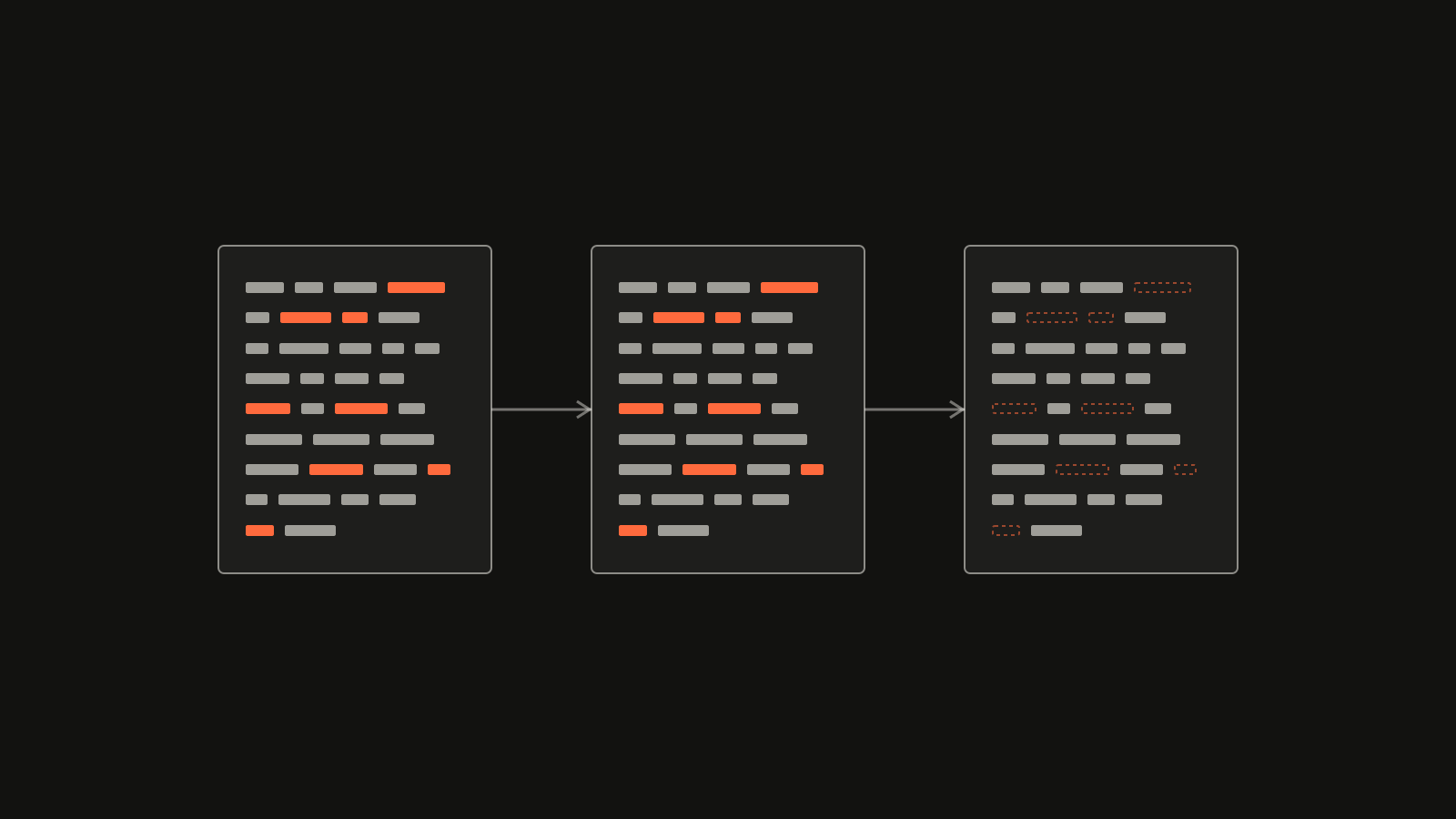
If you put an app on the EU market under your own name, and it generates text, images, audio or video with Claude, GPT, Gemini or an open-weight model, the EU AI Act most likely treats you as the provider of a generative AI system. The duty in Article 50(2) to make outputs "marked in a machine-readable format and detectable as artificially generated or manipulated" then falls on you. The model vendor may have a parallel duty for its own apps and API, but that does not discharge yours (our reading of Articles 3 and 50 and the Commission's guidelines). You may rely on the vendor's watermark if it meets the law, but showing that it does stays your job.
The 2 December 2026 date is narrower than many headlines suggest. It ends a four-month grace period, added by the amending Regulation (EU) 2026/1744 (the "Digital Omnibus on AI"), that covers only the marking duty and only systems "placed on the market before 2 August 2026". A generative system launched in the EU on or after 2 August 2026 has had to mark since launch. The duty to tell people they are talking to an AI, and the duties to label deepfakes and some published text, applied on 2 August 2026 with no grace period at all.
Vendor defaults differ, and none settles the question for you; the vendor table below has them as of 21 October 2026. This article explains the law as written and the Commission's reading of it; it is not legal advice, and the Commission's guidelines are themselves non-binding.
What applies when
From 2 August 2026, Article 50 of the AI Act, Regulation (EU) 2024/1689 applies to every in-scope system, whatever its launch date, with one exception: marking by generative systems already on the market. The table uses the text as amended by Regulation (EU) 2026/1744, in force since 27 July 2026.
| From | Who | What | Legal source |
|---|---|---|---|
| 2 August 2026 | Providers of systems that interact with people (chatbots, voice assistants, agents) | Tell people they are interacting with an AI, unless that is obvious. No grace period. | Article 50(1) |
| 2 August 2026 | Providers of generative systems placed on the EU market on or after 2 August 2026 | Mark outputs in a machine-readable format and make them detectable, from launch. | Article 50(2) |
| 2 August 2026 | Deployers making deepfakes, or publishing AI text to inform the public on matters of public interest | Disclose it; for text, unless a human reviewed it and someone holds editorial responsibility. | Article 50(4) |
| 2 December 2026 | Providers of generative systems placed on the EU market before 2 August 2026 | Comply with the marking and detection duty. | Article 111(4) |
| 2 December 2026 | Providers and deployers of systems that generate non-consensual intimate imagery or child sexual abuse material | New prohibitions apply. | Article 5(1)(ba) and (bb), as amended |
All of this information must be given "in a clear and distinguishable manner at the latest at the time of the first interaction or exposure" (Article 50(5)). Breaches can cost up to EUR 15 million or 3% of worldwide annual turnover, whichever is higher (Article 99(4)(g)); for SMEs, including start-ups, and, since the Omnibus, small mid-caps, the lower figure is the cap (Article 99(6) and (6a)). An app built on Claude, GPT or Gemini by a third party answers to national market surveillance authorities, according to the Commission's questions and answers on Article 50.
Telling people they are talking to an AI
For most apps that show model output, the duty already overdue is Article 50(1). The Commission's guidelines on Article 50 of 20 July 2026 are concrete. "A single, prominent notification before the first interaction of the AI system with a particular natural person is likely to suffice in most instances", but periodic reminders are likely needed for vulnerable users, for financial, legal or health advice and for AI companions (paragraph 40). A disclosure placed "only in terms and conditions, URLs, or documentation" is not enough on its own, nor is a watermark users cannot perceive or a generic 'assistant' label (paragraph 38). The "obvious" exception "should be interpreted restrictively" (paragraph 45). Anthropic's Usage Policy, in the version shown as effective 12 November 2026, requires consumer-facing chatbots and agents to "disclose to users that they are interacting with AI rather than a human", "at a minimum at the beginning of each chat session or in the product interface".
What the 2 December 2026 deadline covers
The grace period is a new Article 111(4): "Providers of AI systems, including general-purpose AI systems, generating synthetic audio, image, video or text content, that have been placed on the market before 2 August 2026 shall take the necessary steps in order to comply with Article 50(2) by 2 December 2026." Three limits follow.
- Only marking. A chatbot that also generates content gets the transition "only with regard to the marking obligation under Article 50(2) AI Act" (guidelines, paragraph 153); its AI disclosure was due on 2 August.
- Only systems already on the market. The test is your AI system's market date, not the model's.
- Only providers. Deployers have no Article 50(2) duty to begin with.
Two details are less settled. The guidelines extend the grace period to systems "placed on the market or put into service before 2 August 2026", but Article 111(4), the binding text, says only "placed on the market". And the law does not say whether adding a generative feature to an app already on the market, or switching an existing app to a newer model, counts as placing a new system on the market. The cautious course is to treat a generative feature launched on or after 2 August 2026 as a new system, even inside an older app. If the model behind it is watermarked, the question matters less for marking, though you still need a detector the right people can reach.
Outputs generated before 2 August 2026 "do not need to be marked or labelled retroactively" (paragraph 154). Nothing specific covers what a grandfathered system produces between 2 August and 2 December.
Provider or deployer: whose duty is the marking?
Under the definitions in Article 3(3), (4) and (68) of the AI Act, a company that places an AI system on the market under its own name is its provider, including when the model comes from another company under contract. Article 50(2) is a provider duty.
The guidelines say "Article 50 AI Act does not explicitly apply to GPAI models" (paragraph 27). Their main example of a provider (paragraph 11) is a company offering "a generative or interactive AI application (e.g. a chatbot, image generator, AI agent) on the Union market under its own name or trademark" to users who may integrate it "into their existing processes". That can fit a model vendor's own API, and Anthropic's Help Center page on marking says it signed the Code of Practice "as a provider of both generative AI models and generative AI systems". So the vendor may carry its own duty. The guidelines have no example of an app built on another company's API, and nothing we read suggests the vendor's duty replaces the app maker's.
In practice:
- You ship a product, feature, agent or API that generates content, under your brand. You are its provider: Article 50(2) is yours, and so is Article 50(1) if people interact with it. If you also publish deepfakes or public-interest text with it, Article 50(4) applies too (paragraph 15).
- Your staff use ChatGPT, Claude or Gemini to write marketing copy. You are a deployer. Marking sits with the vendor as provider of those apps; yours is labelling under Article 50(4), only for deepfakes and public-interest text.
- You fine-tune or modify someone else's generative system and offer it under your name. You become the provider of "the new system" (paragraph 11).
- You only host or distribute other people's AI content. You are neither, though platforms are "strongly encouraged to preserve the marking and labelling" (paragraph 16).
Being outside the EU does not help: Article 2(1)(c) covers providers in third countries "where the output produced by the AI system is used in the Union".
Relying on the vendor's mark is allowed but does not transfer the duty. Providers "may rely on the marking solution implemented by an upstream model provider", but "Such reliance is without prejudice to the responsibility of the provider of the AI system to demonstrate compliance with Article 50(2) AI Act" (paragraph 74). Marking is also only half the duty. Marking "without the means for their detection being available" will "not suffice" (paragraph 70), and the provider must ensure that "the means of detection are available to the persons potentially exposed to the content" (paragraph 75). For free-form text, which is harder to detect reliably, Sub-measure 2.1.2 of the Code of Practice lets signatories restrict detection to "verified expert end-users with a legitimate need", such as authorities, media, fact-checkers and researchers. If you rely on another company's detector, you must check that it complies (paragraph 78).
What has to be marked, and what does not
Article 50(2) covers synthetic "audio, image, video or text content", including mixed AI and human material. Its technical solutions must be "effective, interoperable, robust and reliable as far as this is technically feasible", taking into account the type of content, cost and the state of the art. That qualifier underpins the carve-outs below.
Out of scope altogether, under paragraphs 63 and 68 of the guidelines:
- "a short sequence of numbers, symbols or letters", such as single words, captions, alt text and UI labels;
- source code, including "natural-language comments and contextual information that form an integral part of the source code", SQL, YAML and JSON;
- output exchanged only between machines "without any exposure to humans", such as agent-to-agent messages;
- an agent's intermediate steps "such as reasoning and chain of thought";
- intermediate outputs in closed production workflows, where only the final output needs marking.
Two of the exceptions written into Article 50(2) matter here; the third covers uses authorised by law to fight crime. They exempt systems that "perform an assistive function for standard editing or do not substantially alter the input data provided by the deployer or the semantics thereof". The guidelines' standard editing includes "Grammar correction and spellchecking", minor stylistic polishing and translation; summaries and rewriting that "changes style, structure and meaning" need marking. Two narrower exemptions come from proportionality: internal, "strictly technical" business output seen by a limited group of professionals (paragraph 87), and real-time content that is never stored, as in games, where marking is not technically feasible and people are told (paragraph 88).
How to mark is left to the provider, but the Code of Practice on Transparency of AI-Generated Content, assessed as adequate by the Commission and the AI Board on 8 and 9 July 2026, is the benchmark; providers who do not sign it are expected to run a gap analysis against it (paragraph 148). For media and text in a file, signatories commit to "at least two layers of machine-readable marking": signed metadata, usually C2PA Content Credentials, and an imperceptible watermark. For plain text, "a single-layer of marking as described in Sub-measure 1.1.2 is considered sufficient", and "For free-form text longer than 200 tokens, watermarking still needs to be applied". Our explainer on how AI text watermarks work covers why edits and short passages weaken a text watermark.
The labelling duty for published text and deepfakes
This is a deployer duty, and a machine-readable mark does not meet it: "deployers cannot simply rely on the machine-readable marking embedded in the content by the provider", says the Commission's Q&A on deepfakes. The text duty covers only published text that aims to inform the public on matters of public interest, such as politics or public health (paragraph 131). It does not apply where someone "holds editorial responsibility for the publication of the content" after a review that at least fact-checks it (paragraph 134).
What Anthropic, OpenAI and Google mark
All three signed Section 1 of the Code, according to the Commission's signatory page. That does not make their API customers compliant. What matters is what each marks by default on your surface, and who can run the detector. Checked on 21 October 2026:
| Text from the API | Images, audio, video and files | Default for API customers | Detection | |
|---|---|---|---|---|
| Anthropic (Claude) | Model-level watermark on listed models, on the Claude API and on AWS, Google Cloud and Microsoft Foundry. Not yet on Haiku 4.5, Sonnet 4.5 and 4.6, Opus 4.5, 4.6 and 4.7, or Mythos 5. | C2PA metadata only, with no embedded watermark, on image, video and audio files from the code execution sandbox. Not on text files, PDFs or office documents. | On. No opt-out is documented. | Text detection API in private preview for regulators, media, researchers and similar groups, and for enterprises "similarly obligated" under the Act. Free checker for files. |
| OpenAI (GPT) | textGrain watermark for "select models", announced 5 October 2026. No source we read names them. | Images: C2PA and SynthID; audio: SynthID, as reported by The New Stack. Not in OpenAI's API image or text-to-speech guides. | Text: off, opt in per organisation or project, as reported by The New Stack and BleepingComputer. | Text verification only for approved organisations; opting in does not give you access. Images and audio through the Content Provenance API. |
| Google (Gemini) | Not documented for the Gemini API; documented for the Gemini app and web. | SynthID on images, music and video. Speech generation docs do not mention a watermark. | Images, music and video on; text and speech undocumented. | SynthID Detector, open to everyone, for images, video and audio. No public text detector. |
| Open-weight models | None unless you add it. | None unless you add it. | Not applicable. | Yours to provide. |
Anthropic. The Help Center page (last modified 8 October 2026) says "Watermarking will be applied at the model level, which means it will be present no matter which Claude product or surface the text comes from", and "Anthropic is adding watermarks to outputs from models released before August 2, 2026", without a date. A note that "Rollout on Amazon Bedrock will complete by October 17" was still on the page on 21 October. The code execution docs describe the file credentials. Detector access goes through Anthropic's access request form.
OpenAI. We could not load OpenAI's 5 October 2026 announcement. The New Stack quotes it: "Starting today, API customers globally will be able to opt in to text watermarking for select models. Text watermarking will remain off by default in the API". BleepingComputer reports the same. The New Stack adds that "API customers that opt into textGrain don't automatically gain the ability to detect its watermark". OpenAI's developer docs, their llms.txt index and the API changelog (entries to 20 October 2026) have no text-watermarking page or entry. The content provenance guide says "Text verification is currently available only to approved organizations including AI research and academic institutions."
Google. The Gemini API docs say "All generated images include a SynthID watermark" (image generation), the same for music, "Videos created by Veo are watermarked using SynthID" (Veo) and "All generated videos include SynthID watermarking" (Gemini Omni Flash). The speech generation page does not mention a watermark, and no Google document covers API text. Google's SynthID page says that with SynthID Detector "anyone can easily check if an image, video, or audio file was made with AI from Google or our partners, including OpenAI". On Google's developer forum, an account whose profile is titled "Google" said on 5 August 2026 that "Generated text from the API is NOT SynthID-watermarked", then on 19 August that it "IS actually SynthID-watermarked". A forum reply is not documentation.
Open-weight models. The open-source exemption does not extend to Article 50 (guidelines, paragraph 23), so if you serve Llama, Mistral or Qwen, the marking and the detector are yours to build. Google's SynthID Text ships in Hugging Face Transformers, and Meta publishes TextSeal.
What you must not strip from AI output
Article 50 does not forbid removing a mark. The pressure comes from your own duty: if you rely on the vendor's mark, anything in your pipeline that removes it leaves your outputs unmarked.
- Re-encoding. Resizing, format conversion, CDN recompression or a screenshot removes C2PA metadata; Anthropic's docs say "Re-encoding, format conversion, screenshots, and tools that strip metadata remove the credential". Watermarks such as SynthID are designed to survive some of this.
- A rewriting pass. A second model or a paraphraser thins a text watermark: in OpenAI's own tests, as reported by The New Stack, replacing 25% of the words in a 400-token passage with synonyms cut detection from about 92% to 17%.
- Trimming and splicing. Short excerpts carry too little signal to detect.
Under Measure 1.2 of the Code, signatories will prohibit "the intentional removal of or tampering with metadata markings by deployers or any other third party". On 21 October 2026 we found no such clause in Anthropic's Usage Policy (version effective 12 November 2026); OpenAI's provenance guide says "Don't use repeated queries to reverse-engineer, remove, or evade a watermark".
A worked example: one product, five features
A hypothetical start-up sells a writing tool to estate agents and launched it in the EU in March 2026. It is the provider of the tool.
| Feature (hypothetical) | Role | What applies | From when |
|---|---|---|---|
| Chat assistant for agents' clients, on Claude Haiku 4.5 | Provider | AI disclosure. Marking of replies of 200 tokens or more. Haiku 4.5 had no text watermark as of 21 October 2026 (page last updated 8 October), so Anthropic adds it, the start-up moves to a watermarked model such as Haiku 5.5, or it marks the text itself. | Disclosure since 2 August 2026; marking by 2 December 2026 |
| "Fix my grammar" button | Provider | Standard editing, so no marking. | Not applicable |
| Property descriptions on Claude Sonnet 5 | Provider | Marking, which Sonnet 5's watermark provides, plus a reachable detector. The agents who publish them owe no label, as product descriptions are outside the public-interest text duty, unless they make energy or sustainability claims. | 2 December 2026 |
| Virtual staging photos from the Gemini API | Provider | Gemini supplies SynthID; for the Code's second layer the start-up adds signed C2PA metadata and checks its CDN keeps it. An agent publishing a realistic staged photo should consider whether it is a deepfake. | Provider: 2 December 2026; agent: since 2 August 2026 |
| A weekly AI-written housing market report on the start-up's blog | Deployer | A visible label, unless a named editor fact-checks each report and no AI edits follow. | Since 2 August 2026 |
Where the published guidance gets Article 50 wrong
Three errors recur in widely shared explainers.
| Claim | Where we saw it | What the texts say |
|---|---|---|
| Developers building on model APIs are deployers. | byteiota ("anyone using AI APIs to build a product. You are a deployer."); Usercentrics on chatbot disclosure | A company offering an AI application under its own name is its provider (Article 3(3); guidelines, paragraph 11), and Article 50(1) and (2) are provider duties. |
| The watermarking deadline is 2 December 2026. | Usercentrics' summary, and many headlines | Only for systems on the market before 2 August 2026. |
| Signing the Code gives a presumption of conformity. | Hayes Solicitors, before the final Code: signatories "will benefit from a presumption of conformity" | Recital 41 of Regulation (EU) 2026/1744: codes "do not grant a presumption of conformity". The Commission's opinion: "Adherence to the code does not constitute conclusive evidence of compliance with these obligations." |
What to do now
For each feature that generates content for people in the EU:
- Fix your role and your date. If it ships under your name, you are its provider. Launched before 2 August 2026: marking is due by 2 December. On or after: it is due now.
- Check your model's marking. Match your exact model and surface against the vendor table. OpenAI has not documented which models textGrain covers, so confirm yours in the dashboard or in writing. Where nothing is documented, as for Gemini API text and speech, ask in writing or mark the output yourself.
- Get a detector the right people can reach. For text, at least expert users and authorities; for media the public sees, the public. On Claude, apply through Anthropic's access form as an enterprise "similarly obligated" under the Act. On OpenAI, opting in gives you no text detector, so ask OpenAI whether authorities can verify your text. For images, video and audio, SynthID Detector is open to everyone and covers Gemini and OpenAI output, and OpenAI's Content Provenance API checks images and audio.
Then show the AI disclosure before the first interaction, check that nothing in your pipeline strips the mark, and decide whether public-interest publishing gets a label or a named editor. The rule that holds across vendors: if you cannot point to a vendor document saying your exact model, on your exact surface, marks its output, and to a detector the people exposed to it can reach (for text, at least expert users and authorities), assume the marking is not done and close the gap yourself.